Seeking Interventional Radiology Care?

Same-Day Rule-Out DVT
Same-Day Rule-Out DVT at VidaVascular in Oxon Hill, MD, Waldorf, MD & Springfield, VA
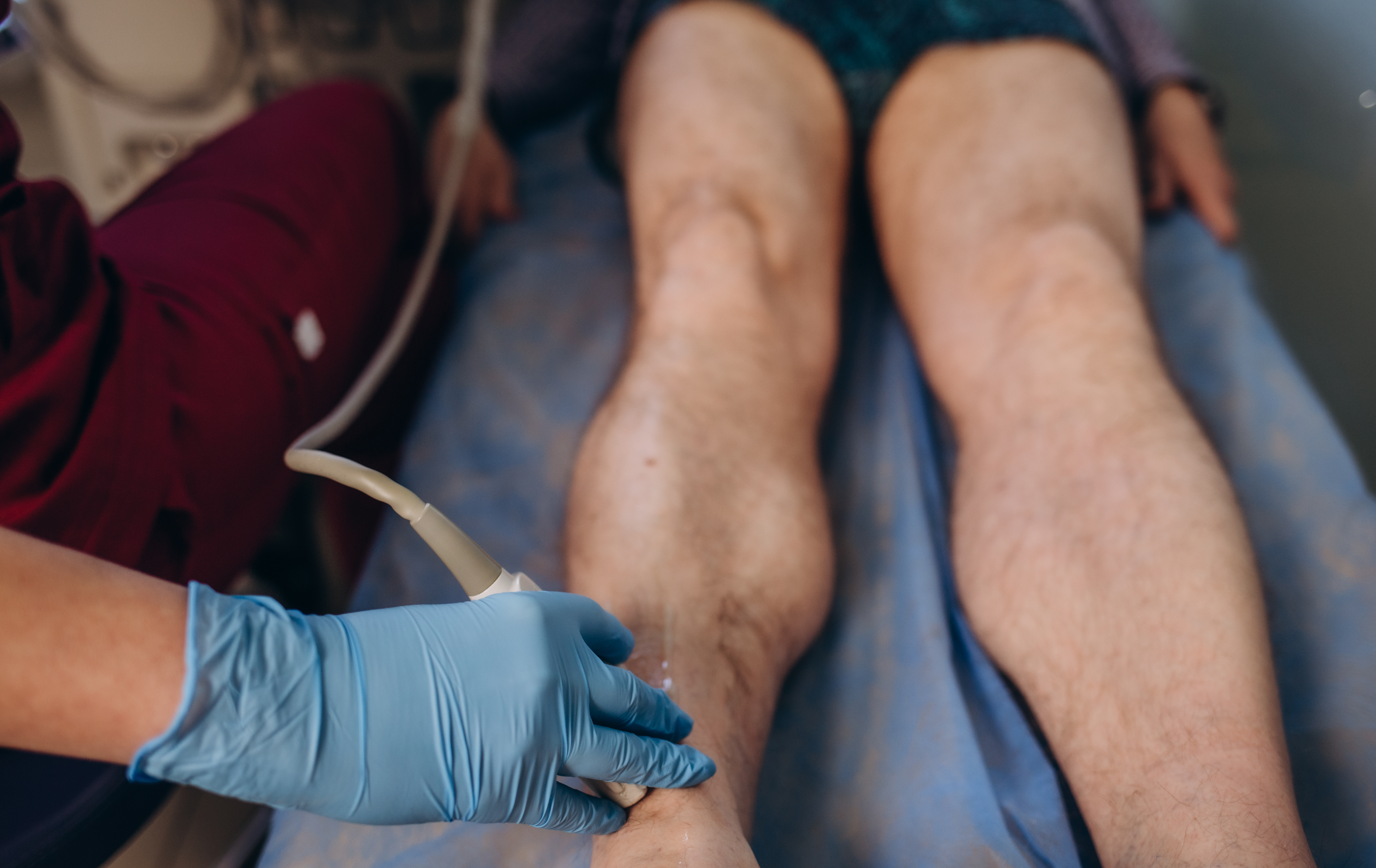
A sudden swollen leg can be scary, and for good reason. One possible cause is deep vein thrombosis (DVT), which is a blood clot in a deep vein, usually in the leg. Not every sore calf is a clot, but a missed DVT can become dangerous if the clot travels to the lungs.
At VidaVascular, a vascular and interventional care practice in Oxon Hill, Maryland, Same-Day Rule-Out DVT evaluations are offered for patients who need a fast, medically sound answer. We can rule out DVTs the same day, provided you have an order from a physician. Patients often come from nearby communities such as National Harbor, Fort Washington, Temple Hills, and Suitland when they want a prompt assessment instead of waiting, guessing, or worrying about their symptoms.
What is a DVT, and why does it matter?
A DVT is a clot that forms in a deep vein, most commonly in the thigh or calf. Think of a vein like a soft tube that carries blood back to your heart. A clot can partially or fully block that tube.
Why it matters:
- A clot can cause pain, swelling, and inflammation in the leg.
- The biggest risk is if part of the clot breaks off and travels to the lungs, causing a pulmonary embolism (PE), which can be life-threatening. (7)
What symptoms should make me get checked right away?
DVT symptoms can vary. Some people have obvious swelling. Others have subtle pain that feels like a pulled muscle.
Symptoms that should get checked soon:
- One leg swelling (especially if it is new)
- Pain or tenderness in the calf or thigh
- Warmth or redness in one area of the leg
- Skin that looks shiny or tight compared with the other leg
Emergency symptoms that need urgent care right now:
- Shortness of breath
- Chest pain that worsens with deep breathing
- Coughing up blood
- Fainting or severe dizziness
These can be signs of a pulmonary embolism. (7)
What does “rule-out DVT” mean, and what tests might be used?
“Rule-out DVT” means using evidence-based steps to decide whether a clot is present, and if it is not, making sure it is safe to stop testing.
Clinicians often use a combination of:
- Clinical pretest probability (a structured risk check, often based on tools like the Wells model) (1)
- D-dimer blood test (helps detect clot breakdown in the body, but a positive result alone does not prove DVT) (3)
- Compression ultrasound of the leg veins (a key imaging test for suspected DVT) (2,3)
Depending on your risk level and test results, some patients can safely rule out DVT without imaging, while others need an ultrasound right away or follow-up imaging. These strategies are supported by major guidelines and research. (1–3,6)
Who is at higher risk for DVT?
DVT often happens when blood flow slows down, the blood becomes more likely to clot, or a vein is injured. You can have a DVT without any risk factors, but risk is higher when certain things stack up. (8)
Common risk factors include:
- Recent surgery or hospitalization
- Long periods of not moving (bed rest, long travel, recovery from injury)
- Cancer or certain cancer treatments
- Pregnancy and the weeks after delivery
- Hormone therapy or birth control pills (in some people)
- Prior DVT or pulmonary embolism
- Family history of blood clots
- Smoking and obesity can also increase risk, especially with other factors present (8)
What should I do if I’m coming in for a Same-Day Rule-Out DVT check?
If you are worried about a DVT, it helps to show up prepared. You do not need to “tough it out” or self-diagnose using the internet. (Your search history will not earn a medical degree, sadly.)
Helpful things to bring or know:
- When your symptoms started and how they changed
- Any recent travel, surgery, injury, or time spent inactive
- Current medications, especially hormones or blood thinners
- History of clots, miscarriages, or clotting disorders in the family
- Any recent imaging or lab results if you have them
Important safety note:
- If you have severe shortness of breath, chest pain, fainting, or coughing up blood, go to emergency care immediately. (7)
After testing, the next steps depend on the results. If DVT is ruled out, your clinician may discuss other common causes of leg symptoms. If a DVT is found, your care team will discuss treatment and urgency based on your specific situation and risk level. (2,3)
Why Choose VidaVascular for Same-Day Rule-Out DVT?
A possible DVT is not something to “wait and see” for days, especially when symptoms are new or one-sided. VidaVascular offers Same-Day Rule-Out DVT evaluations in Oxon Hill, MD, with a patient-centered approach focused on getting you a clear answer and a safe plan.
Located in Oxon Hill, Maryland, VidaVascular serves patients in nearby communities including National Harbor, Fort Washington, Temple Hills, Suitland, and Forest Heights. If you are searching for DVT ultrasound, blood clot evaluation, or vascular care near Oxon Hill in Prince George’s County, a prompt assessment can help you move from worry to facts.
Take the First Step Toward Better Health
Whether you're seeking Same-Day Rule-Out DVT, or face other mental health or addiction challenges, let VidaVascular be your trusted partner in care.
Experience care that’s personal, proactive, and centered around you.
References:
1. Wells, P. S., Anderson, D. R., Bormanis, J., Guy, F., Mitchell, M., Gray, L., Clement, C., Robinson, K. S., Lewandowski, B., & Wygers, M. (1997). Value of assessment of pretest probability of deep-vein thrombosis in clinical management. The Lancet, 350(9094), 1795–1798. doi:10.1016/S0140-6736(97)08140-3.
2. Bates, S. M., Jaeschke, R., Stevens, S. M., Goodacre, S., Wells, P. S., Stevenson, M. D., Kearon, C., Schünemann, H. J., Crowther, M., Pauker, S. G., & Makdissi, R. (2012). Diagnosis of DVT: Antithrombotic therapy and prevention of thrombosis, 9th ed: American College of Chest Physicians evidence-based clinical practice guidelines. Chest, 141(2 Suppl), e351S–e418S.
3. Lim, W., Le Gal, G., Bates, S. M., Righini, M., Haramati, L. B., Lang, E., Kline, J. A., Chasteen, S., Snyder, M., Patel, P., Bhatt, M., Wiercioch, W., Schünemann, H. J., & Mustafa, R. A. (2018). American Society of Hematology 2018 guidelines for management of venous thromboembolism: Diagnosis of venous thromboembolism. Blood Advances, 2(22), 3226–3256. doi:10.1182/bloodadvances.2018024828.
4. Johnson, S. A., Stevens, S. M., Woller, S. C., Lake, E., Donadini, M., Cheng, J., Labarère, J., & Douketis, J. D. (2010). Risk of deep vein thrombosis following a single negative whole-leg compression ultrasound: A systematic review and meta-analysis. JAMA, 303(5), 438–445.
5. Kraaijpoel, N., Carrier, M., Le Gal, G., & colleagues. (2020). Diagnostic accuracy of three ultrasonography strategies for suspected deep vein thrombosis: A systematic review and meta-analysis. PLOS ONE, 15(2), e0228788. doi:10.1371/journal.pone.0228788.
6. Kearon, C., de Wit, K., Parpia, S., Schulman, S., Afilalo, M., Hirsch, A., Spencer, F. A., Sharma, S., D’Aragon, F., Deshaies, J.-F., & colleagues. (2022). Diagnosis of deep vein thrombosis with D-dimer adjusted to clinical probability: Prospective diagnostic management study. The BMJ, 376, e067378.
7. Konstantinides, S. V., Meyer, G., Becattini, C., Bueno, H., Geersing, G.-J., Harjola, V.-P., Huisman, M. V., Humbert, M., Jennings, C. S., Jiménez, D., Kucher, N., Lang, I. M., Lankeit, M., Lorusso, R., Mazzolai, L., Meneveau, N., Ní Áinle, F., Prandoni, P., Pruszczyk, P., … ESC Scientific Document Group. (2020). 2019 ESC Guidelines for the diagnosis and management of acute pulmonary embolism developed in collaboration with the European Respiratory Society (ERS). European Heart Journal, 41(4), 543–603. doi:10.1093/eurheartj/ehz405.
8. Goldhaber, S. Z. (2010). Risk factors for venous thromboembolism. Journal of the American College of Cardiology, 56(1), 1–7.
Access The Convenient Care You Deserve
Get In Touch
Call, click, or visit — we’re here to make getting care simple & stress-free!
251 National Harbor Blvd, Suite 104 Oxon Hill, MD 20745
Get In Touch
Call, click, or visit — we’re here to make getting care simple & stress-free!
6120 Brandon Ave, Suite 216, Springfield, VA 22150
Get In Touch
Call, click, or visit — we’re here to make getting care simple & stress-free!
4255 Altamont Place, Suite 101, White Plains, MD 20695
Our Promise to You
To provide advanced, personalized Interventional Radiology care with skill, compassion, and respect—every time you visit. You’re not just a condition to treat; you’re a whole person with unique goals and challenges, and we’re here to help you overcome them.
We’re committed to serving our community with integrity and heart, combining innovation with genuine connection—because true healing goes beyond checklists.


© 2026 VidaVascular | Accessibility | Terms & Conditions | Privacy Policy | Powered by DoctoGrow