Varicose Veins & Endovenous Ablation
Endovenous ablation is a minimally invasive varicose vein treatment that closes the faulty vein from the inside so blood reroutes through healthier veins, with no vein stripping and little downtime. Varicose veins are those bulging, twisty “rope-like” veins you can see under the skin, usually in the legs. Some people mainly dislike how they look. Others feel heavy, achy, or swollen by the end of the day. And for some, varicose veins are a sign of a deeper vein problem called chronic venous disease, where blood has trouble traveling back up to the heart.
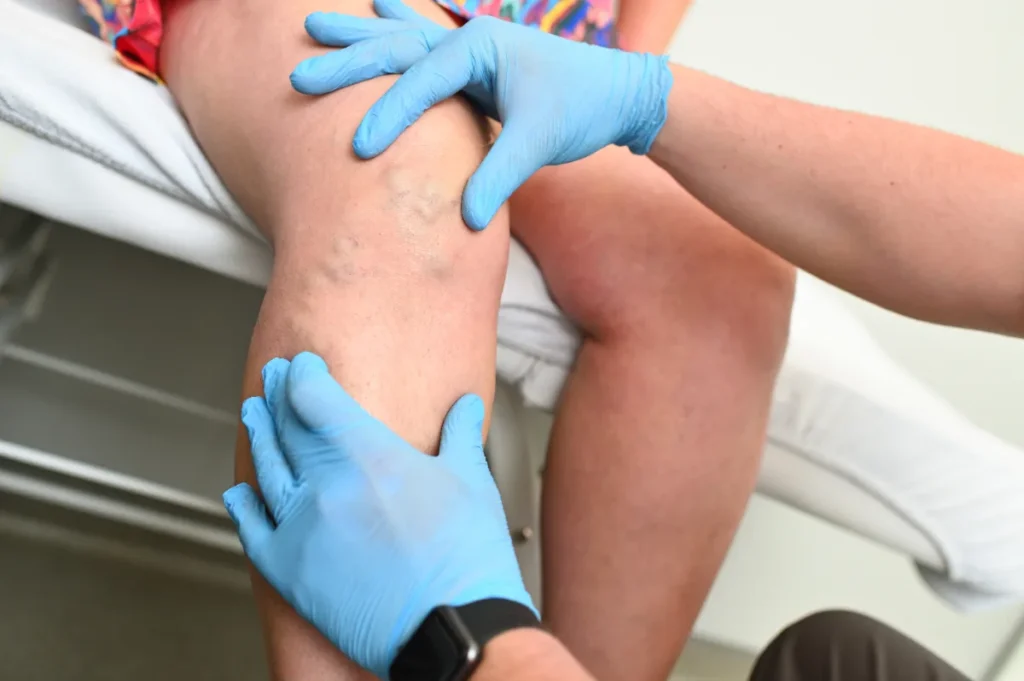
At VidaVascular, a vascular and interventional care practice, evaluation and treatment options for varicose veins are offered in a patient-centered way, including endovenous ablation for appropriate candidates, especially when leg symptoms start interfering with work, sleep, exercise, or daily comfort.
Want to learn more about the condition itself? Read our guide to varicose veins, including symptoms, causes, and how they are diagnosed.
What are varicose veins, and why do they happen?
Your leg veins have tiny one-way “doors” called valves. These valves help push blood upward against gravity. When valves weaken, blood can fall backward and pool in the vein. This is called venous reflux. Over time, the vein stretches and becomes varicose. (2,6)
Common risk factors include:
- Family history of varicose veins
- Pregnancy
- Jobs with long hours of standing or sitting
- Aging
- Higher body weight
- Prior blood clots or vein injury (in some cases) (2,6)
Spider veins are smaller and closer to the skin. They can happen for similar reasons, but spider veins do not always mean deeper reflux is present.
When are varicose veins more than “just cosmetic”?
If you have symptoms, skin changes, or swelling, varicose veins may be part of a medical condition, not just an appearance issue. (2,6) You do not need to “wait until it gets awful” to get checked.
Signs it may be more than cosmetic:
- Aching, heaviness, throbbing, or burning in the legs
- Swelling around the ankles or lower legs
- Night cramps or restless legs
- Itching over a vein or dry, irritated skin
- Skin color changes near the ankle (brownish discoloration)
- A firm, tender vein that feels like a cord (possible superficial thrombophlebitis)
- Slow-healing wounds or open sores near the ankle (venous ulcers) (2,3,6)
Know the emergency signs
If you ever have sudden one-leg swelling, chest pain, or shortness of breath, that can be an emergency because it may involve a blood clot.
How are varicose veins diagnosed?
Most vein evaluations start with a conversation about your symptoms and a physical exam. The key test used in many vein practices is a duplex ultrasound. (2,6)
Duplex ultrasound is like a “live video” of blood flow. It can help show:
- Whether blood is flowing the right direction
- Which vein segments have reflux
- Whether there are clots or blockages
- Whether the issue involves superficial veins, deep veins, or both (2,6)
At VidaVascular, the focus is to match the treatment plan to the reason you have symptoms, not just what the veins look like on the surface.
What is endovenous ablation, and how can it help varicose veins?
Endovenous ablation is a minimally invasive treatment used to close a refluxing vein from the inside. “Endovenous” means inside the vein. “Ablation” means using energy to seal it closed. The most common types are radiofrequency ablation (RFA) and endovenous laser ablation (EVLA). (2,4)
In simple terms:
- A refluxing vein is acting like a leaky pipe.
- Ablation closes that faulty segment.
- Blood re-routes into healthier veins.
- Many patients feel less heaviness, aching, and swelling over time. (1,2,4)
Research and guidelines support endovenous ablation as a first-line treatment for many patients with symptomatic saphenous vein reflux, often with faster recovery than older surgical stripping approaches. (1,2,4,5,6)
What are the benefits, risks, and alternatives to endovenous ablation?
Endovenous ablation is widely used, but it is not “for everyone,” and it is not the only tool in the toolbox. A good plan usually considers your symptoms, ultrasound findings, and goals. (2,6)
Potential benefits:
- Minimally invasive, typically done without large incisions (2,4)
- Symptom improvement for many patients, including better quality of life (1,2,4,5)
- Lower recurrence in treated segments compared with doing nothing, although new vein problems can still develop over time (2,6)
Possible risks and side effects:
- Bruising or soreness along the treated vein
- Temporary numbness or tingling near the skin (nerve irritation can happen, especially below the knee) (2)
- Inflammation of a superficial vein (phlebitis)
- Skin burns (rare, more associated with laser) (4,5)
- Blood clot risk is low but not zero, including heat-related clot extension in some cases (2,6)
Alternatives or add-on treatments that may be recommended depending on your case:
- Compression stockings, leg elevation, walking, and weight management when relevant (2,6)
- Sclerotherapy (injecting medication to close smaller veins) (2)
- Phlebectomy (removing bulging surface veins through tiny punctures) (2)
- Ultrasound-guided foam sclerotherapy for certain vein patterns (1,4)
If you have venous leg ulcers, studies show that treating superficial reflux earlier can help ulcer healing, alongside compression. (3)
Why choose VidaVascular for varicose veins and endovenous ablation?
Leg vein symptoms can sneak up on you. First it is “my legs feel tired,” then suddenly you are planning your day around sitting breaks. If you have varicose veins with heaviness, aching, swelling, or skin changes, it is worth getting a proper vein evaluation. VidaVascular offers varicose vein care and endovenous ablation, with the goal of helping you understand what is causing your symptoms and what options actually fit your situation.
If you want to explore minimally invasive varicose vein treatment options, a visit can help you get clear answers and a realistic plan.
Your VidaVascular Care Team
Your evaluation and treatment are guided by our board-certified vascular and interventional radiologist and clinical team.

Where to Get Varicose Veins Care
Choose the office that is most convenient for you. All locations share one phone number for scheduling.
Frequently Asked Questions About Varicose Veins
Where is Varicose Veins offered?
VidaVascular has offices in Oxon Hill, MD, Springfield, VA, and White Plains, MD. Call (866) 800-2346 to schedule at the location most convenient for you.
Does insurance cover my visit?
VidaVascular accepts most major insurance providers. Coverage varies by plan and procedure, so please call us to confirm whether your specific plan is covered. Insurance information.
Can my doctor refer me?
Yes. Clinicians can send referrals through our HIPAA-compliant clinician referral form, and patients or community members can use the patient/community referral form.
How do I schedule an appointment?
Call (866) 800-2346 or request an appointment online. Our offices are open Monday through Thursday, 8 AM to 5 PM, and Friday, 8 AM to 3 PM.
References
- Brittenden, J., Cotton, S. C., Elders, A., Ramsay, C. R., Norrie, J., Burr, J. M., Campbell, B., & Lee, A. J. (2014). A randomized trial of treatments for varicose veins. The New England Journal of Medicine, 371(13), 1218–1227.
- Gloviczki, P., Comerota, A. J., Dalsing, M. C., Eklof, B. G., Gillespie, D. L., Gloviczki, M. L., Lohr, J. M., McLafferty, R. B., Meissner, M. H., Murad, M. H., Padberg, F. T., Pappas, P. J., Passman, M. A., Raffetto, J. D., & Wakefield, T. W. (2011). The care of patients with varicose veins and associated chronic venous diseases: Clinical practice guidelines of the Society for Vascular Surgery and the American Venous Forum. Journal of Vascular Surgery, 53(5 Suppl), 2S–48S.
- Gohel, M. S., Heatley, F., Liu, X., Bradbury, A., Bulbulia, R., Cullum, N., … & EVRA Trial Investigators. (2018). A randomized trial of early endovenous ablation in venous ulceration. The New England Journal of Medicine, 378(22), 2105–2114.
- Rasmussen, L. H., Lawaetz, M., Bjoern, L., Vennits, B., Blemings, A., & Eklof, B. (2011). Randomized clinical trial comparing endovenous laser ablation, radiofrequency ablation, foam sclerotherapy, and surgical stripping for great saphenous varicose veins. British Journal of Surgery, 98(8), 1079–1087.
- van den Bos, R. R., Arends, L., Kockaert, M., Neumann, M., & Nijsten, T. (2009). Endovenous therapies of lower extremity varicosities: A meta-analysis. Journal of Vascular Surgery, 49(1), 230–239.
- Wittens, C., Davies, A. H., Baekgaard, N., Broholm, R., Cavezzi, A., Chastanet, S., … & De Maeseneer, M. (2015). Editor’s Choice: Management of chronic venous disease: Clinical practice guidelines of the European Society for Vascular Surgery (ESVS). European Journal of Vascular and Endovascular Surgery, 49(6), 678–737.
Ready to Learn More About Varicose Veins?
Schedule an evaluation with our team. We’ll explain your options clearly and help you decide what fits your goals.